
Dr Ramani Rheumatology Clinic · drramani.co
PATIENT GUIDE · FOOD SAFETY
Safer food choices when your immunity is lower
Familiar food. A little more care. Practical ways to lower your risk of foodborne illness at home and when eating out.
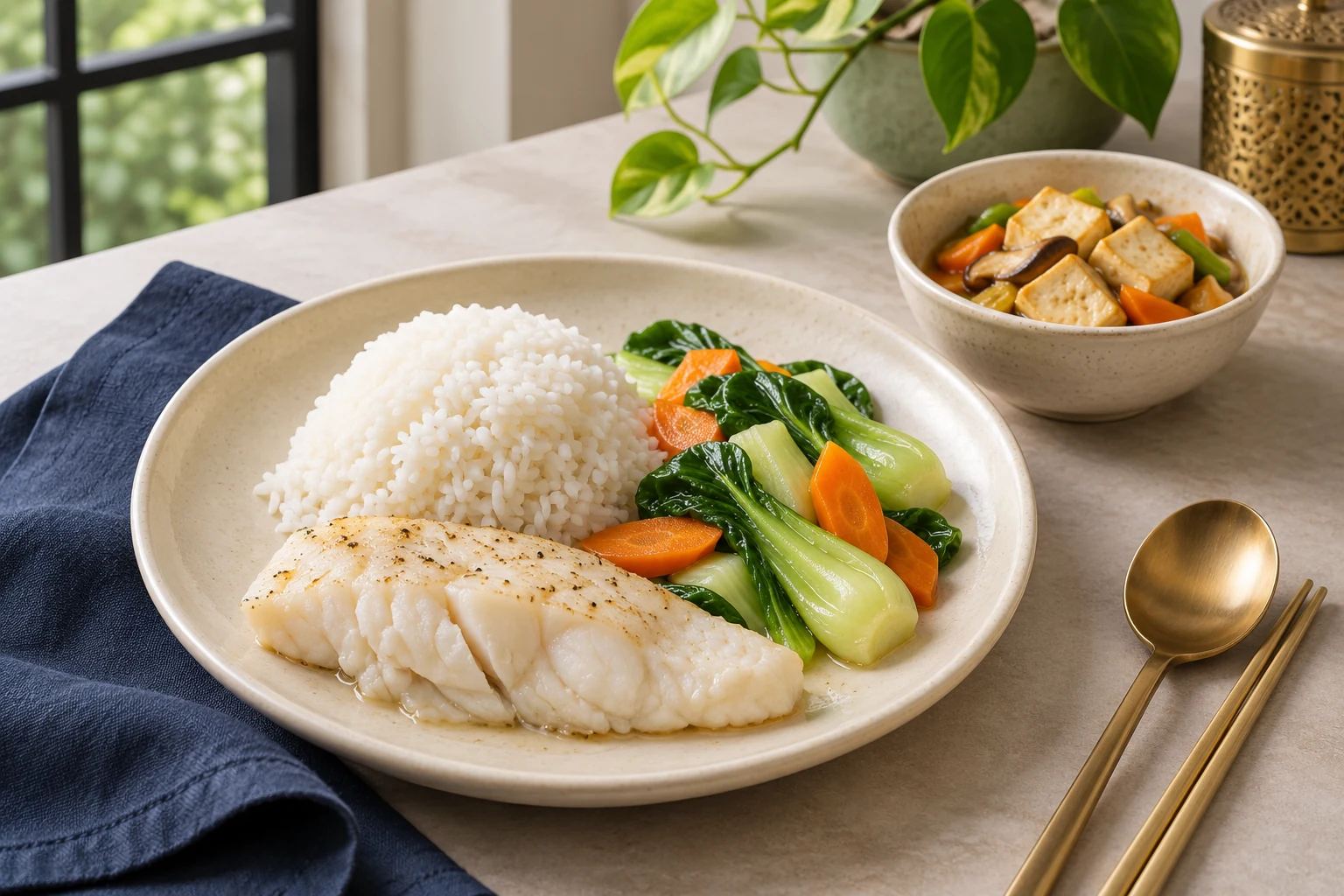
Some illnesses and treatments make it harder for the body to fight infection. Food poisoning can then be more serious. These everyday precautions can help; your care team can explain whether you need any extra restrictions.
- 01
Cook thoroughly
Use a food thermometer rather than guessing from appearance.
- 02
Handle produce carefully
Wash before cutting or peeling. Cooking adds protection.
- 03
Refrigerate promptly
Pay extra attention to time out of the fridge in hot weather.
01 / SAFER CHOICES
Small food swaps, useful protection
These are practical examples. The full CDC guide has additional food categories and exceptions.
Meat, poultry & seafood
Raw or partly cooked meat, fish or shellfish.
Fully cooked food, checked against the temperature guide below.
Eggs
Runny eggs and uncooked egg mixtures.
Firm whites and yolks; pasteurised egg for recipes served uncooked.
Milk & juice
Unpasteurised milk or juice.
Products clearly labelled pasteurised.
Fruit & vegetables
Unwashed fresh produce.
Wash under running water. Washed, cooked produce is the safest option.
Bean sprouts
Raw or lightly warmed sprouts.
Sprouts cooked thoroughly.
Cold cuts & hot dogs
Chilled deli meat eaten without reheating.
Heat until steaming hot throughout, or to 74°C.
Smoked fish
Refrigerated smoked fish served cold.
Shelf-stable or canned fish, or smoked fish cooked in a dish.
Cheese
Unpasteurised cheese, queso-fresco-type cheese and unheated deli-sliced cheese.
Pasteurised hard cheese, or pasteurised soft/deli-sliced cheese heated to 74°C or steaming hot.
02 / KITCHEN HABITS
Four habits for a safer kitchen
- 01
Clean
Wash hands with soap for at least 20 seconds. Clean worktops, utensils and boards after preparing food. Do not wash raw chicken: splashes can spread germs.
- 02
Separate
Keep raw meat and its juices away from food that is ready to eat. Use separate boards and plates, and store raw meat in leakproof containers.
- 03
Cook
Check the centre with a food thermometer. Colour alone is not a reliable safety check for meat or poultry.
- 04
Chill
Keep the fridge at 4°C or colder. Refrigerate perishable food within 2 hours, or within 1 hour when the surrounding temperature is above 32°C. Divide leftovers into shallow containers.
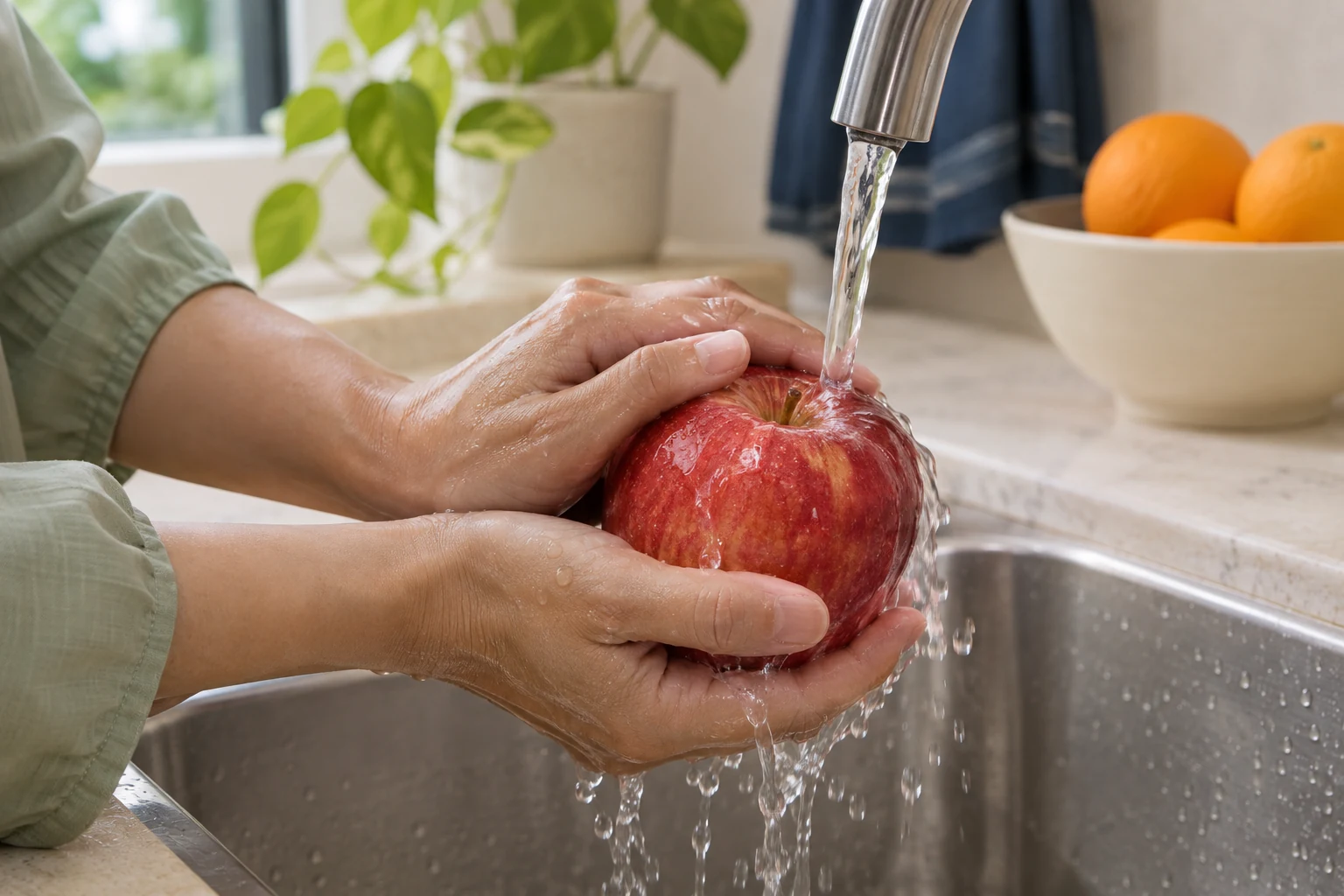
03 / WASHING PRODUCE
Wash first. Then cut or peel.
Rinse fruit and vegetables under plain running water, gently rubbing the surface. Wash even fruit you plan to peel: a knife can carry dirt from the skin into the flesh.
Do not use soap or household disinfectant on produce. Scrub firm produce with a clean produce brush, remove damaged areas, and dry with a clean towel.
Choose undamaged produce and keep pre-cut items refrigerated. Washing reduces contamination; it does not sterilise food. Follow any stricter instructions from your care team.
04 / COOKING TEMPERATURES
A thermometer takes out the guesswork
Measure the internal temperature. These are minimum cooking temperatures, not oven settings.
| Food | Minimum internal temperature | Important detail |
|---|---|---|
| Chicken and other poultry, including minced poultry | 74°C | None |
| Leftovers and casseroles | 74°C | None |
| Minced beef, pork and other non-poultry ground meats | 71°C | None |
| Fish | 63°C | None |
| Whole cuts of beef, pork, lamb or veal | 63°C | Then rest for at least 3 minutes before cutting or eating. |
Cook eggs until both white and yolk are firm. Follow the linked official chart for other foods and specific preparation instructions.
05 / EATING OUT
Eating out in Malaysia? Keep it simple.
- Choose a fully cooked meal served hot, rather than raw seafood or runny eggs.
- Ask for bean sprouts to be cooked thoroughly, not added raw at the end.
- Be cautious with food sitting at room temperature. Takeaway leftovers need the same prompt refrigeration as food cooked at home.
06 / WHEN TO GET HELP
If you feel unwell, get advice early
Foodborne illness may cause diarrhoea, vomiting, cramps or fever. If your immunity is reduced, contact a clinician promptly rather than waiting for symptoms to become severe.
Seek urgent medical care for:
- Bloody diarrhoea.
- Repeated vomiting that prevents you from keeping fluids down.
- Signs of dehydration, such as very little urine or dizziness when standing.
- Severe or worsening illness, or a high fever.
If you are seriously unwell, go to an emergency department. Do not wait for a WhatsApp reply.
Questions you may have
Do I have to stop eating fresh fruit?
Not automatically. Wash fruit before eating, cutting or peeling it. Your care team may recommend extra restrictions if your immunity is very low.
Are raw vegetables and raw sprouts the same risk?
No. Properly washed vegetables are a safer choice than unwashed ones, and cooking adds protection. Raw or lightly cooked sprouts are specifically higher risk; cook them thoroughly.
Should I wait for diarrhoea to last several days before calling?
Not if your immunity is reduced or you are becoming unwell. Get advice early. Bloody diarrhoea, inability to keep fluids down and signs of dehydration need urgent medical assessment.
Not sure which precautions apply to you?
Ask my clinic how your condition and treatment affect your food-safety needs.
WhatsApp my clinic about food safety (opens in a new tab)Other patient guides
Sources & references
Sources checked: 23 November 2026
- CDC: Safer Food Choices for People With Weakened Immune Systems (opens in a new tab)
- CDC: Preventing Food Poisoning (opens in a new tab)
- FDA: 7 Tips for Cleaning Fruits, Vegetables (opens in a new tab)
- FoodSafety.gov: Safe Minimum Internal Temperatures (opens in a new tab)
- CDC: Food Poisoning Symptoms (opens in a new tab)
Original patient-guide wording informed by CDC food-safety guidance, with supporting FDA and FoodSafety.gov references. The original CDC information is freely available through the links below. Referencing CDC does not imply CDC or US Government endorsement of this clinic.
General educational information only. This guide does not replace individual medical advice. Follow your treating team’s instructions, especially if you have very low immunity or other dietary restrictions.