
EGPA (Churg-Strauss Syndrome)
EGPA is rare and serious, and it often shows itself first as changing asthma or nerve symptoms in someone with a strong allergy history. I try to spot that pattern early because the condition can affect nerves, lungs, skin, kidneys and heart.
2021 ACR evidence-based guideline for EGPA
A summary I use in practice: how EGPA presents by ANCA status, the baseline and selected investigations, the treatment algorithm for new-onset and relapsing disease, and the key recommendation statements. This one is written for doctors, so do not worry if parts of it read as technical.
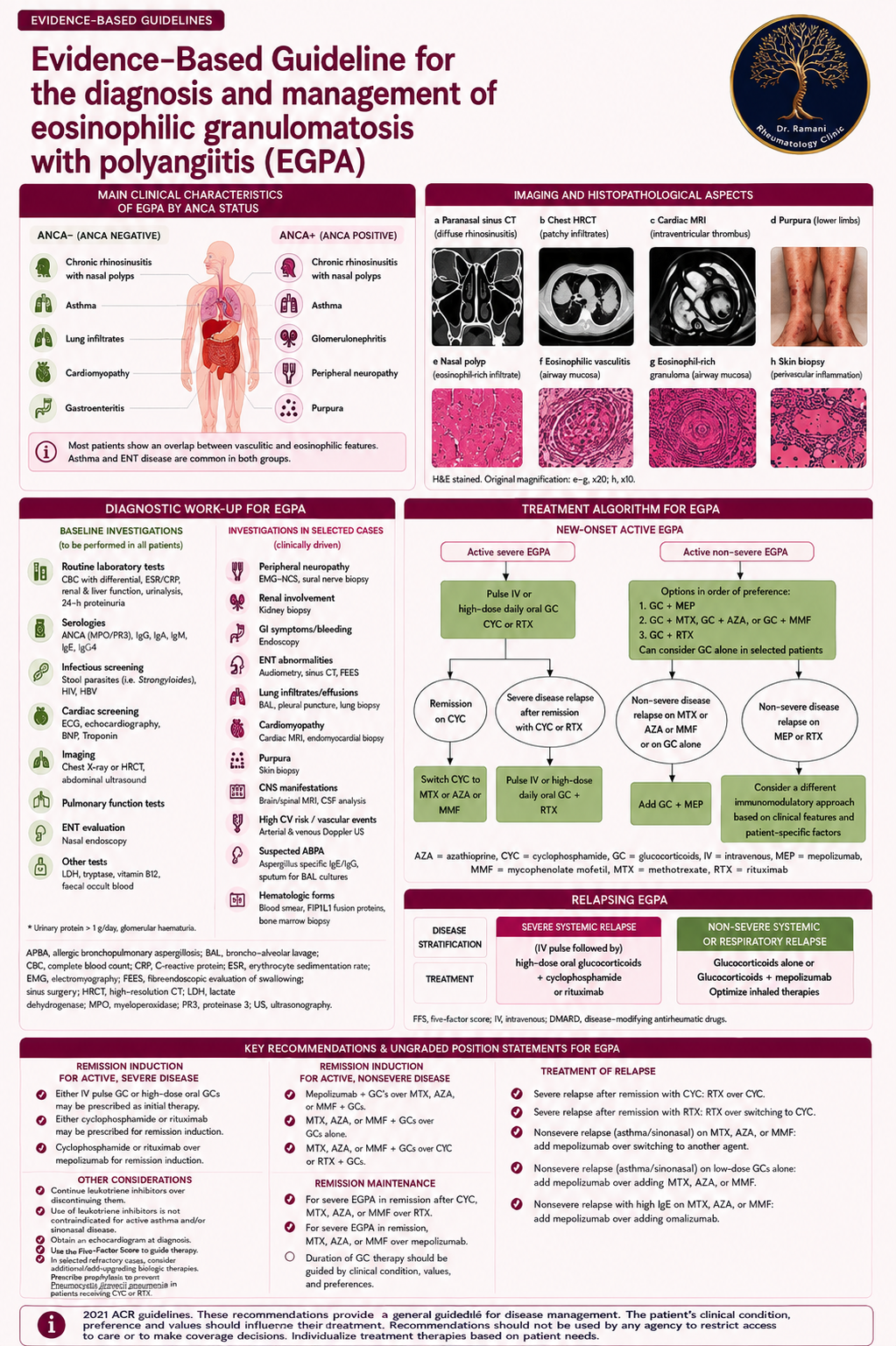
What egpa (churg-strauss syndrome) is
Eosinophilic granulomatosis with polyangiitis, previously called Churg-Strauss syndrome, is a rare type of vasculitis. It involves inflammation of small and medium blood vessels and is often associated with asthma, sinus disease and high eosinophil counts.
Symptoms to look out for
Asthma that changes or becomes difficult to control
Sinus symptoms, nasal polyps or persistent congestion
Numbness, weakness or nerve pain in hands or feet
Rashes, fever, weight loss or night sweats
Breathlessness, chest symptoms or abdominal pain in some patients
Why this matters to a rheumatologist
Rheumatology is involved because EGPA is an immune-mediated vasculitis that may affect nerves, lungs, skin, kidneys, heart and other organs. Diagnosis relies on pulling the whole picture together rather than any single test.
Signs I would like you to seek care for
For emergency symptoms please seek urgent or emergency care first rather than waiting for a WhatsApp reply.
Asthma with unexplained nerve symptoms or rash
Coughing blood, chest pain or severe breathlessness
Weakness or numbness affecting a limb
Fever, weight loss or systemic illness with high eosinophils
What a specialist review looks like
I review asthma and allergy history, examine for vasculitis signs, check blood counts and inflammation markers, and coordinate imaging, urine tests or specialist input depending on organ involvement.
EGPA: Common Patient Questions
Understanding EGPA & Diagnosis
Eosinophilic granulomatosis with polyangiitis, or EGPA, is a rare autoimmune condition that causes inflammation in small and medium-sized blood vessels. It is associated with high levels of eosinophils, a type of white blood cell involved in allergic inflammation.
Most people with EGPA have a history of asthma, sinus problems, allergies or nasal polyps. However, EGPA can extend beyond the airways and affect the nerves, skin, heart, lungs, digestive system, kidneys and, more rarely, the brain.
Symptoms & Their Impact on the Body
Speak with me
If you are worried about EGPA symptoms, or your asthma is changing alongside new nerve, skin or systemic symptoms, WhatsApp my clinic and we can help you decide whether a rheumatology assessment is the right next step.
Other conditions I treat
This page is for general education only and does not replace medical advice. Please consult a qualified healthcare professional for diagnosis and treatment.