
Scleroderma / Systemic Sclerosis
Systemic sclerosis can sound overwhelming when patients first hear about it. My aim is to explain the pattern calmly, screen the lungs, heart, kidneys, circulation and digestion where needed, and pick up complications early so they can be treated in time.
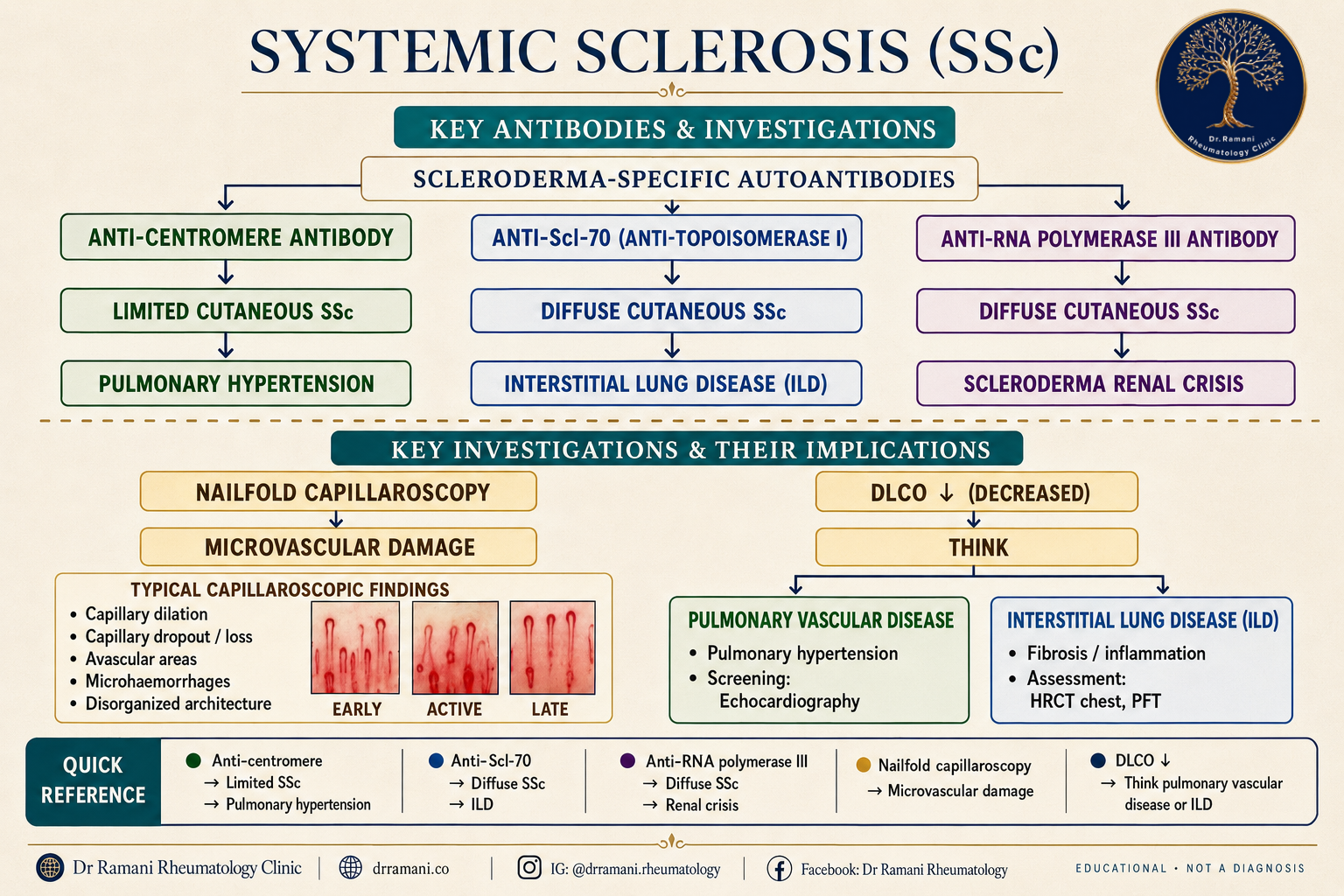
Systemic sclerosis at a glance
This is the map I use when explaining your blood tests and scans. The antibody pattern gives me a hint about which type of systemic sclerosis you have and which organs I should watch most closely, while nailfold capillaroscopy and lung function tests show me how your small blood vessels and lungs are coping. Do not use it to diagnose yourself, bring your questions to me instead.
What scleroderma / systemic sclerosis is
Systemic sclerosis, often called scleroderma, is an autoimmune connective tissue disease that can cause skin thickening, Raynaud's phenomenon and internal organ involvement. It can affect blood vessels, digestion, lungs, heart, kidneys, joints and muscles.
Symptoms to look out for
Raynaud's phenomenon in fingers or toes
Swollen fingers or skin thickening
Reflux, swallowing difficulty or bloating
Joint pain, stiffness or tendon tightness
Breathlessness, cough or reduced exercise tolerance
Why this matters to a rheumatologist
Rheumatology care focuses on diagnosis, organ screening, symptom control and early treatment of complications such as lung disease, pulmonary hypertension, kidney crisis or digital ulcers.
Signs I would like you to seek care for
For emergency symptoms please seek urgent or emergency care first rather than waiting for a WhatsApp reply.
New Raynaud's with swollen fingers or ulcers
Skin thickening of fingers, hands or face
Breathlessness, chest symptoms or swallowing difficulty
High blood pressure or kidney concerns in known systemic sclerosis
What a specialist review looks like
I examine skin, joints and circulation, review antibody tests, arrange nailfold or organ screening where appropriate, and coordinate care with lung, heart, kidney or gastroenterology teams if needed.
Questions my patients often ask me
No. Localised forms can affect skin, but systemic sclerosis can involve internal organs.
Speak with me
If you have Raynaud's with swollen fingers, skin thickening or breathlessness, or you are already living with systemic sclerosis and need coordinated care, WhatsApp my clinic and we can help you decide whether a rheumatology review is the right next step.
Other conditions I treat
This page is for general education only and does not replace medical advice. Please consult a qualified healthcare professional for diagnosis and treatment.