
Osteoporosis
Osteoporosis is often silent until a fracture happens. My aim on this page is to make prevention, fracture risk and steroid related bone protection easier to understand, so you know when it is worth asking for help.
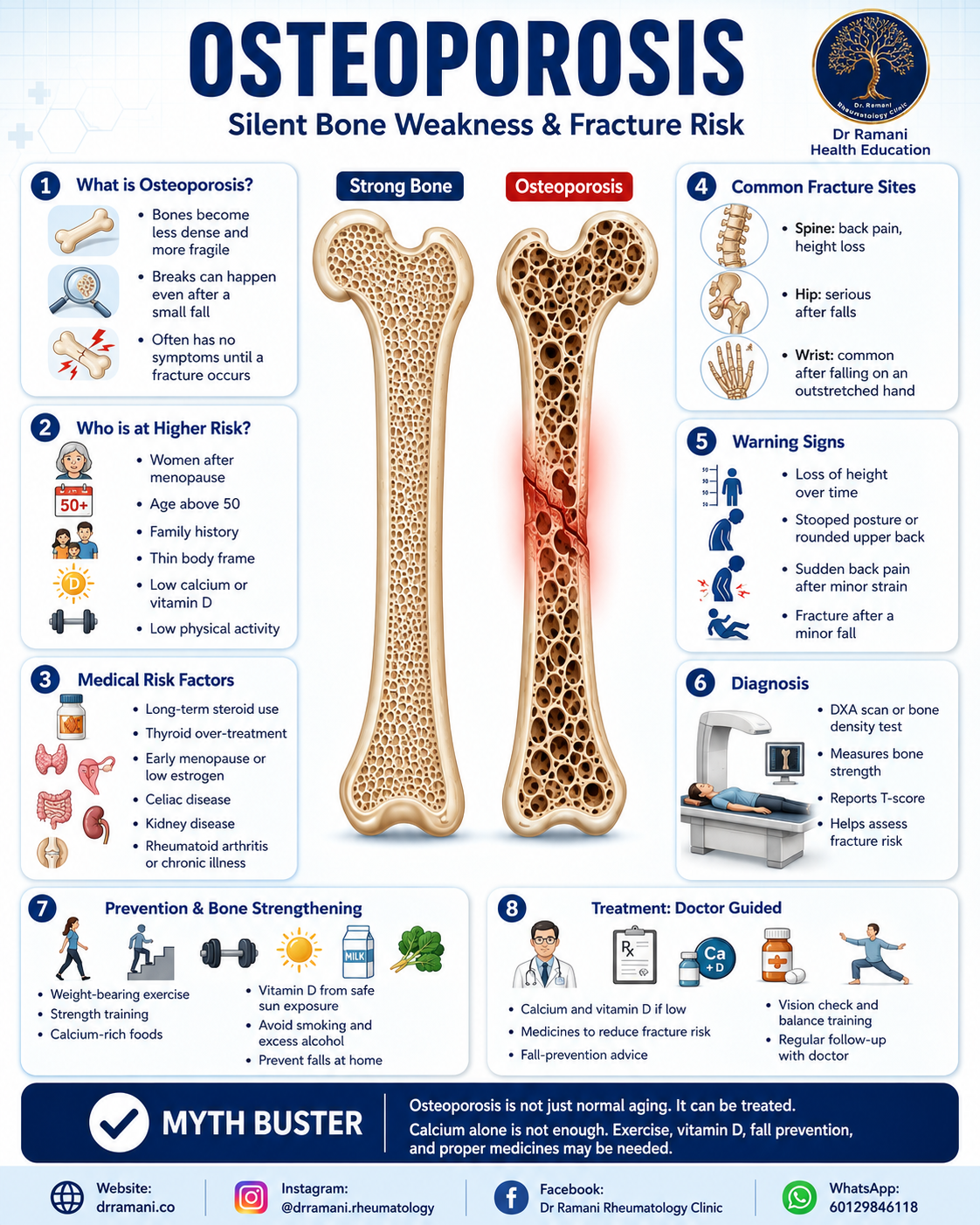
Download my free Osteoporosis guide
A one-page visual guide I put together to explain osteoporosis in plain language: what it is, who is at higher risk, warning signs, how it is diagnosed, and how I approach treatment. Save it, share it with family, or bring it to your next appointment.
For education only. It does not replace a rheumatology assessment.
Let me explain what this is
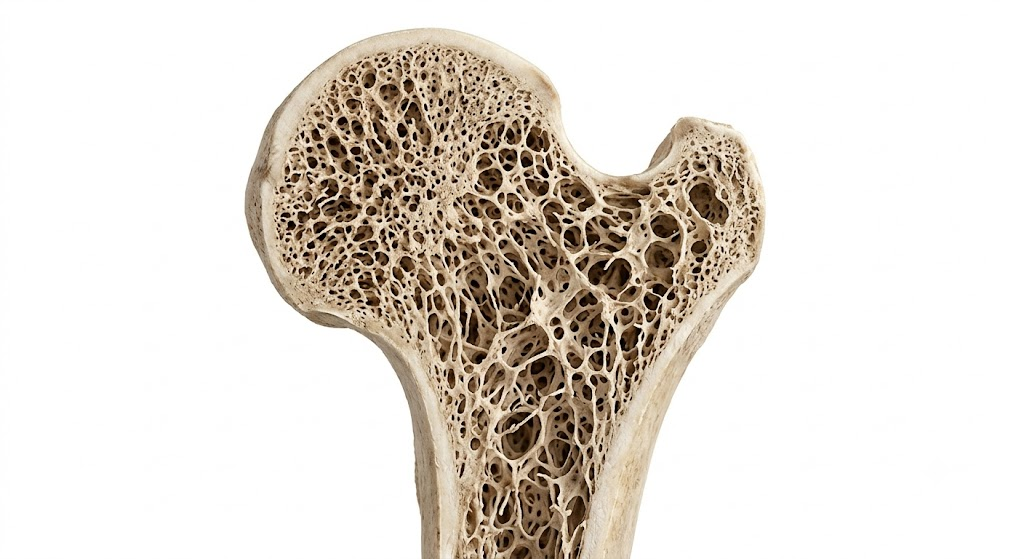
Osteoporosis means the bones have become less dense and more fragile, so they fracture more easily. A fall from standing height, or sometimes no obvious injury at all, can be enough to break a bone.
It is common after menopause and with ageing, but I also see it linked to steroid treatment, inflammatory and autoimmune disease, low body weight and other medical conditions that affect the bone.
The reassuring part is that we can measure bone health, estimate your fracture risk, and use lifestyle and medical treatment to reduce that risk. Please seek specialist care if you are worried.
What patients may notice
Osteoporosis often gives no warning. The first sign for many of my patients is a fracture after a minor slip or fall. A few subtle clues can still hint at it.
Often no symptoms at all before a fracture
Wrist, hip or spine fracture after a minor fall
Back pain from a vertebral compression fracture
Loss of height or a more curved upper back
Fear of falling or reduced confidence on your feet
Getting shorter over the years without other explanation
Who is more likely to get osteoporosis?
Bone strength depends on the peak we reach in early adulthood and how much we lose over time. Menopause, ageing and certain medical conditions can all speed up that loss.
Knowing your risk factors helps me decide whether a bone density scan or blood tests are worth doing, and whether protective treatment is likely to help you.
- Postmenopausal or over 50
- Family history of osteoporosis or hip fracture
- Previous fragility fracture
- Long term steroid treatment
- Inflammatory or autoimmune disease
- Low body weight or being underweight
- Smoking or high alcohol intake
- Low calcium or vitamin D
- Early menopause or low hormone levels
- Certain medical conditions affecting bone
Bone protection in inflammatory and autoimmune disease
In my clinic I often manage bone protection for patients with inflammatory disease, patients on long term steroids, and those on medications that can affect bone health.
Inflammation itself can weaken bone. Steroids add another layer of risk, especially at higher doses or over longer periods. Reviewing your fracture risk is part of good rheumatology care, not an afterthought.
- Long term steroid treatment
- Rheumatoid arthritis or other inflammatory arthritis
- Lupus or connective tissue disease
- Vasculitis on immunosuppressive therapy
- Polymyalgia rheumatica on steroids
- Autoimmune disease with ongoing inflammation
When I would like you to seek help
You do not need to wait for a fracture. If any of these apply to you, please seek specialist care so we can review your bone health properly.
A fracture after a low impact fall
Long term steroid use
Sudden back pain with height loss
A high fracture risk score or abnormal bone density scan
Postmenopausal with multiple risk factors
Family history of hip fracture
How I can help
I would review your fracture history, steroid exposure, menopause status and personal risk factors, and put them together into a clear picture of your fracture risk.
Where useful, I arrange or interpret a bone density (DEXA) scan, check calcium and vitamin D, and look for other medical causes of bone loss.
We can then discuss lifestyle steps and, where appropriate, bone strengthening treatment that reduces the risk of future fractures.
- A careful history of fractures, falls and risk factors
- Review of steroid exposure and inflammatory disease
- Bone density (DEXA) scan where indicated
- Blood tests for calcium, vitamin D and secondary causes
- A clear plan for lifestyle and treatment
Questions my patients often ask me
Please seek specialist care
If you are worried about osteoporosis symptoms, or if your pain keeps coming back with signs of inflammation, WhatsApp my clinic and we can help you decide whether a rheumatology assessment is the right next step.
Dr. Ramani Rheumatology Clinic · Kuala Lumpur
Practical resources to protect your bones
I have built these free tools and guides to help you take action between visits.
A quick self-check to see if your risk of falling is putting your bones at risk of fracture.
Estimate your daily calcium intake from local Malaysian foods and see how close you are to your target.
Local Malaysian meals I recommend for stronger bones, across every budget.
Other conditions I treat
More patient guides are on the way. These pages will be linked here as they become available.
This page is for general education only and does not replace medical advice. Please consult a qualified healthcare professional for diagnosis and treatment.