
CMC Arthritis
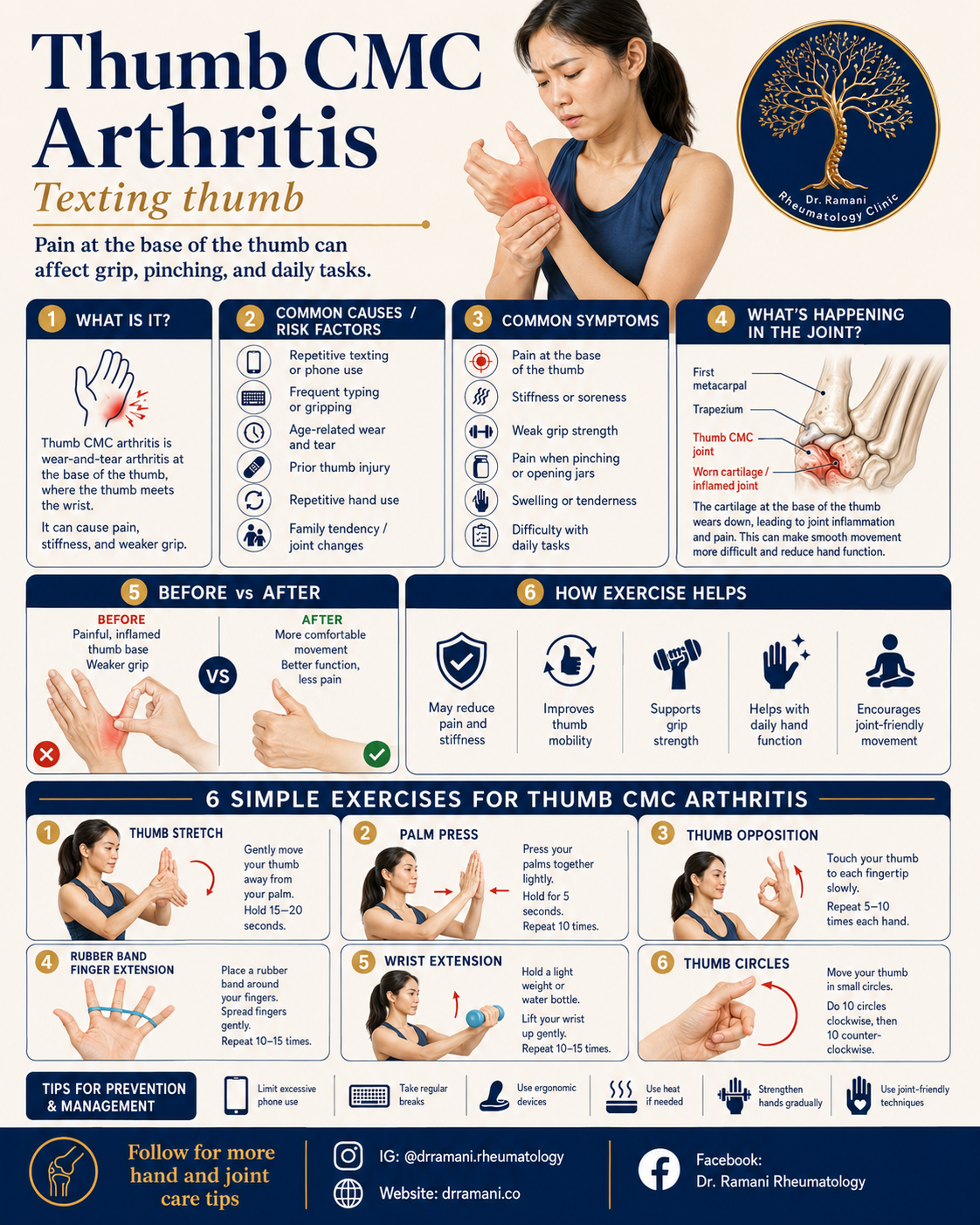
Pain at the base of the thumb, sometimes called texting thumb, is a common complaint. It can affect grip, pinching and everyday tasks such as opening jars, turning keys or holding a phone. Most cases are due to wear-and-tear arthritis of the thumb CMC joint, but other conditions can look similar.
Patient guide from my clinic
What cmc arthritis is
The thumb CMC joint, also called the carpometacarpal or trapeziometacarpal joint, sits at the base of the thumb where the first metacarpal bone meets a small wrist bone called the trapezium. It is one of the most mobile joints in the hand, and carries surprisingly high loads every time we pinch, grip or twist. Over time the cartilage that cushions this joint can wear down, leading to osteoarthritis. This causes pain, stiffness, weakness of grip and sometimes visible changes at the base of the thumb. Common contributors include age-related wear and tear, repetitive texting or phone use, frequent typing or gripping, a previous thumb injury, repetitive hand use at work, and a family tendency to hand osteoarthritis. It is more common in women, particularly after menopause.
Symptoms to look out for
Pain at the base of the thumb, especially with pinching or gripping
Stiffness or soreness in the thumb, often worse in the morning
Weak grip or difficulty opening jars, turning keys or using a phone
Pain when pinching, writing or unscrewing a bottle cap
Swelling or tenderness at the base of the thumb
A visible bump or squared appearance at the base of the thumb over time
Why this matters to a rheumatologist
Most thumb base pain in adults over 40 is osteoarthritis, but I still want to rule out inflammatory causes that need different treatment. Rheumatoid arthritis, psoriatic arthritis and gout can all affect the thumb and hand, and can look similar in the early stages. De Quervain's tenosynovitis, a tendon problem on the thumb side of the wrist, is another common mimic. In younger patients, or when there is swelling in multiple small joints, prolonged morning stiffness, fatigue or a rash, I look carefully for an inflammatory cause. Getting the diagnosis right guides treatment, from joint protection and hand therapy for osteoarthritis, to disease-modifying medication when inflammatory arthritis is confirmed.
Signs I would like you to seek care for
For emergency symptoms please seek urgent or emergency care first rather than waiting for a WhatsApp reply.
Sudden severe pain, redness, warmth or swelling in the thumb or hand
Fever with a hot, painful joint
Numbness or weakness in the hand that is getting worse
Marked deformity or inability to move the thumb after an injury
Swelling and stiffness in several small joints of the hands, especially with morning stiffness lasting more than 30 minutes
Pain that is not improving with joint protection, activity change and simple pain relief
What a specialist review looks like
In clinic I take a careful history of your symptoms, your work and hobbies, then examine the thumb, hand, wrist and other joints. I check for the pattern of joint involvement, tenderness at the CMC joint, tendon signs and any features that suggest inflammatory arthritis. I may arrange blood tests, an X-ray of the hand or an ultrasound when I want to confirm the diagnosis or exclude another cause. Treatment is tailored to what I find. For thumb CMC osteoarthritis this usually includes education on joint protection, ergonomic advice, gentle hand exercises, a supportive splint when needed, suitable pain relief and topical anti-inflammatories. A guided steroid injection into the CMC joint can help selected patients. Where the underlying problem is inflammatory arthritis or gout, treatment is directed at that condition. Surgery is only considered when careful conservative care has not been enough.
Questions my patients often ask me
Heavy phone use can aggravate an already sensitive CMC joint, but it is rarely the sole cause. Age-related cartilage wear, previous injury and family tendency all play a role. Reducing repetitive thumb loading still helps symptoms.
Speak with me
Pain at the base of the thumb can come from wear-and-tear arthritis, tendon problems or inflammatory arthritis. An assessment helps identify the real cause so we can protect your hand function and plan the right treatment together.
Other conditions I treat
This page is for general education only and does not replace medical advice. Please consult a qualified healthcare professional for diagnosis and treatment.