
Cyclophosphamide
Also known as: Endoxan · Cytoxan
Cyclophosphamide is one of the strongest medicines I use, and I reserve it for situations where inflammation threatens an organ or life. When it is needed, it works well and it is given for a limited period, with careful protection of your bladder, blood counts and fertility.
Calm, careful medication review by a consultant rheumatologist.
Cyclophosphamide: a guide for patients
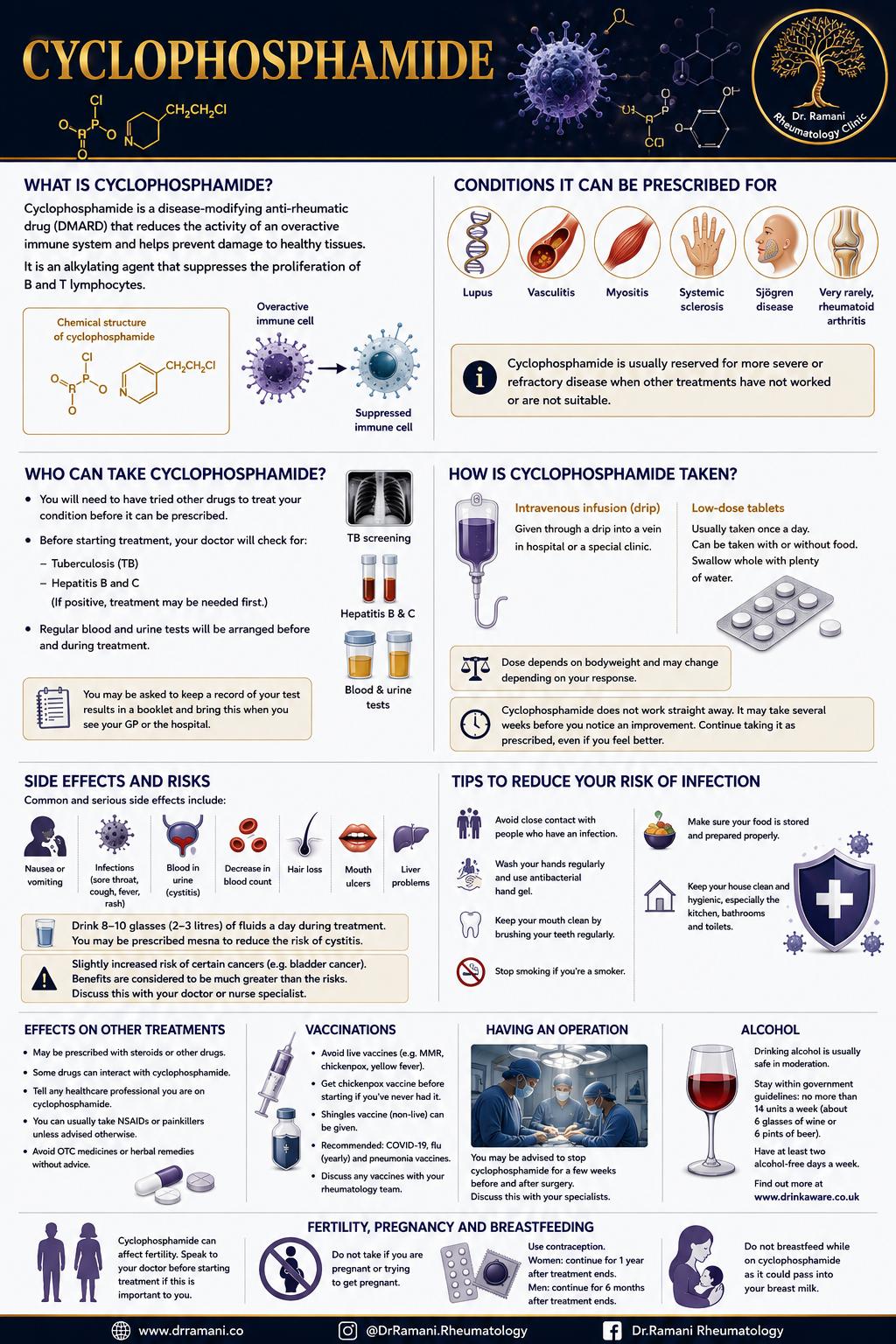
Tap the image to open the full-size version you can save or print.
For nurses and infusion staff
This is the two-page pack I use for cyclophosphamide infusions in day-care. Page one is the physician order and nursing checklist covering pre-infusion screening, dose and the infusion rate steps. Page two is the infusion monitoring chart for vitals and reaction checks. Nurses are welcome to print it for use in the infusion room.
What this medicine is
Cyclophosphamide is a potent immunosuppressant that damps down the cells driving severe autoimmune inflammation. In rheumatology it is most often given as a drip into a vein in a day-care or hospital setting, on a planned schedule of pulses, and less commonly as tablets. It is used as induction treatment, meaning a defined course to bring severe disease under control, after which I usually switch you to a gentler maintenance medicine such as mycophenolate or azathioprine. Because dosing depends on your kidney function, blood counts, weight and diagnosis, your specialist sets the regimen and I do not publish dose schedules here.
Uses and context
I consider cyclophosphamide in organ-threatening disease: severe lupus, especially lupus nephritis or lupus affecting the brain, ANCA-associated vasculitis such as granulomatosis with polyangiitis and microscopic polyangiitis, severe scleroderma-related lung disease, some inflammatory myositis with lung involvement, and other serious vasculitis. It is also used in cancer treatment at different doses, so the leaflet in the box may describe uses and side effects that do not apply to you. If your disease can be controlled with something milder, that is what I will use.
How this relates to rheumatology care
How I use it in practice: cyclophosphamide is a short-term tool, not a long-term one. I aim for the lowest cumulative dose that will control your disease, usually over three to six months, then move to maintenance treatment. Steroids are almost always used alongside it at first and then reduced. Before each pulse I check your blood count and kidney function, and I will delay or reduce a dose if your white cells are low. Two things matter enough that I plan them from the first conversation: bladder protection, because the drug's breakdown products irritate the bladder lining, and fertility, because cyclophosphamide can reduce fertility in both women and men. Good hydration and a protective medicine called mesna are used with infusions, and I discuss fertility preservation before we start whenever that is relevant to you. Related pages you may find useful are my guides to lupus, vasculitis and scleroderma.
What safety checks may matter
Full blood count before each dose and between doses, since the white cell count typically dips about seven to fourteen days after a pulse
Kidney function and liver blood tests, as the dose depends on kidney clearance
Urine dipstick for blood, to look for bladder irritation, and ongoing urine checks after treatment finishes
Screening for hepatitis B, hepatitis C, HIV and tuberculosis before starting, as with other strong immunosuppressants
Pregnancy test before treatment, plus a clear contraception plan for you and your partner
A fertility discussion before the first dose, including referral for egg or sperm preservation when appropriate
Vaccinations reviewed and given before starting where possible, avoiding live vaccines during treatment
Generous fluid intake and mesna with infusions to protect the bladder, plus anti-sickness medicine
Side effects and red flags
If you have emergency symptoms such as severe allergic reaction, breathing difficulty, chest pain, stroke-like symptoms, severe abdominal pain, vomiting blood, black stools, sudden vision loss, severe infection symptoms, or severe weakness or confusion, please seek urgent medical care first rather than waiting for a WhatsApp reply.
Fever, chills, sore throat or feeling suddenly unwell, which may mean infection while your white cells are low
Blood in the urine, burning on passing urine or passing urine much more often
Mouth ulcers, unusual bruising or bleeding, which can point to low blood counts
Breathlessness, a new persistent cough or chest pain
Severe vomiting that stops you drinking, since dehydration is not safe with this medicine
A painful blistering rash in a band, which may be shingles
Things worth knowing day to day
Drink plenty of water on the day of an infusion and for the following day or two, and pass urine regularly. This is the single most useful thing you can do to protect your bladder.
Nausea is common in the first day or two. I prescribe anti-sickness medicine to take regularly rather than waiting for symptoms.
Hair thinning can happen and usually recovers after treatment finishes.
Fertility: cyclophosphamide can bring on early menopause or reduce sperm counts, and the risk rises with age and total dose. Tell me if you may want children so we can plan preservation before starting.
Pregnancy must be avoided during treatment and for a period afterwards, as advised for you. It is not safe in pregnancy.
Avoid live vaccines during treatment. Influenza, COVID-19 and pneumococcal vaccines are encouraged, ideally before you start.
Because a small long-term increase in bladder cancer and blood cancers is described with higher cumulative doses, I keep your total dose as low as possible and continue urine checks after treatment ends.
Tell any surgeon or dentist that you are on cyclophosphamide, and treat infections promptly rather than waiting.
Questions patients often ask me about this medicine
Speak with me
If cyclophosphamide has been suggested for you, or you want a second opinion on whether a gentler option could control your disease, please message my clinic. I will go through the plan, the protection measures and the fertility questions with you properly.
Trusted patient information sources
Other medications used in rheumatology care
This page is for general education only and does not replace medical advice. Please consult a qualified healthcare professional for diagnosis and treatment. Do not start, stop, or change any medicine without advice from your doctor.