
Achilles Tendinopathy
Pain at the back of the heel or ankle can make walking, climbing stairs and exercise difficult. Achilles tendinopathy is often caused by strain, overuse or a tendon tear, and in some patients it is linked to inflammatory arthritis. A specialist review helps clarify the cause and guide the right care.
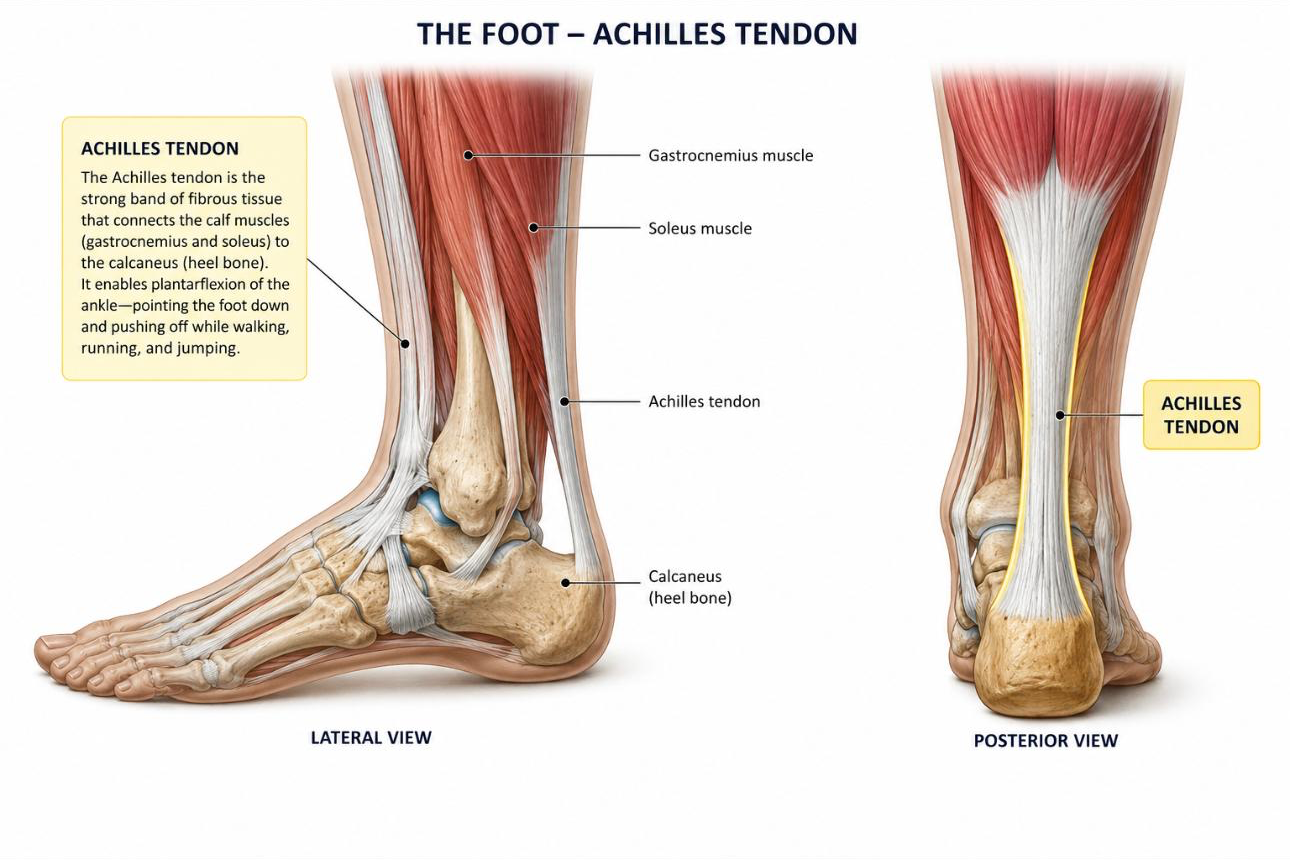
Let me explain what Achilles tendinopathy is
Your Achilles tendon is the thick, rope like band of tissue that connects your calf muscle to your heel bone. It absorbs a lot of load every time you walk, run or push off the ground.
When this tendon becomes irritated or damaged, you can feel pain, swelling, stiffness and difficulty walking. This is what I mean when I say Achilles tendinopathy.
Many patients get better with the right care. If symptoms keep coming back, or if there are signs of inflammation or other joint problems, please seek specialist care.
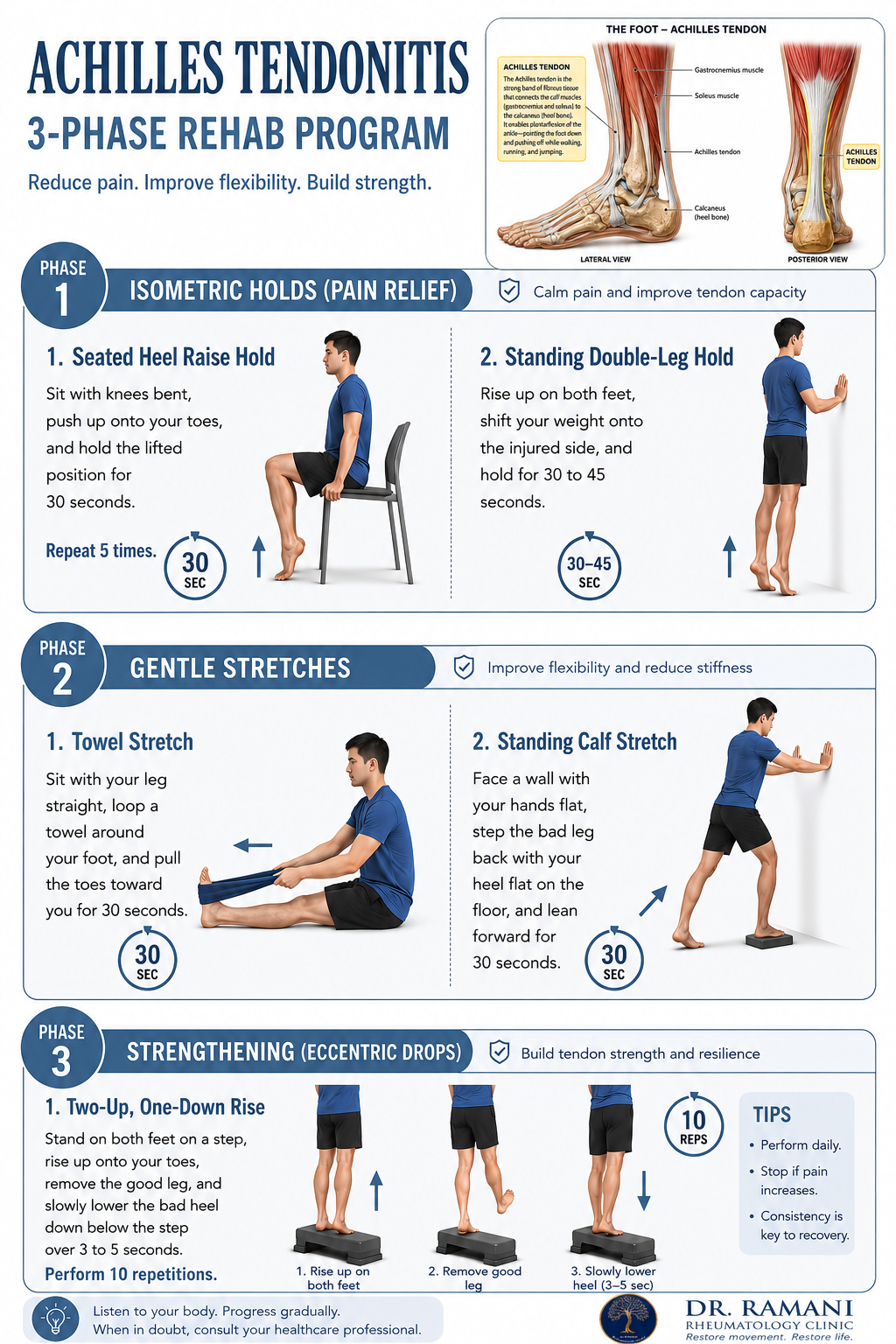
My 3-phase Achilles rehab plan
I use a staged approach: settle the pain first, then restore flexibility, then rebuild tendon strength. Progress gradually, stop if pain increases, and stay consistent. Tap the image to open the full size version.
What does Achilles tendinopathy feel like?
Symptoms can start mildly and slowly build over weeks. Many of my patients tell me they notice it most with the first few steps in the morning, or after a long day on their feet.
Pain behind your heel or along the Achilles tendon
Pain that worsens after walking, running or exercise
Morning stiffness, or stiffness after sitting for a while
Swelling or tenderness around the tendon
Warmth or redness at the back of the heel
Difficulty moving the foot up and down
A lump or thickened area along the tendon
A grating or creaking feeling when moving the ankle
Why does the Achilles tendon get sore?
In my experience, Achilles tendinopathy often develops when the tendon is asked to do more than it can comfortably handle. That extra stress might come from the way you train, the shoes you wear, or the shape of your foot, and sometimes from inflammation inside the body.
Several factors often combine. The good news is that many of them can be changed once we identify them together.
- A sudden increase in activity
- Running or jumping sports
- Tight calf muscles
- Poor or unsupportive footwear
- Very high or very low foot arches
- Repeated strain over time
- Small tears or strain in the tendon
- Inflammatory arthritis
When Achilles pain may be linked to arthritis
Some patients I see develop Achilles tendon pain not from overuse, but because of inflammation where the tendon attaches to the heel bone. I see this in conditions such as psoriatic arthritis, axial spondyloarthritis and reactive arthritis.
If your Achilles pain keeps coming back, affects both sides, or comes alongside morning stiffness, back pain, swollen joints, psoriasis, eye inflammation or a recent infection, I would like to review you.
- Pain that keeps returning
- Pain and stiffness that are worse in the morning
- Other swollen or painful joints
- Lower back pain or buttock pain
- Psoriasis or nail changes
- Eye redness or inflammation
- Symptoms after a recent infection
- Family history of inflammatory arthritis
What you can try at home
In milder cases, simple self care can really help. My aim is for you to settle the pain, protect the tendon, and avoid making the injury worse while you give it time to recover.
Rest
I would like you to ease off activities that worsen the pain. Please avoid running, jumping and long walks while the tendon is sore. Gentle movement from time to time is still encouraged, to stop the area getting stiff.
Ice
Put an ice pack wrapped in a damp cloth on the painful area for about 20 minutes every 2 to 3 hours.
Compression
Wrap a bandage or supportive sleeve around the painful area. It should feel snug enough to support the tendon, but not so tight that it restricts blood flow.
Elevation
When you are resting, raise your foot on a cushion so it sits above the level of your heart. This can help reduce swelling.
Simple pain relief such as paracetamol or a pain relieving gel may help some patients. If you are not sure what is safe for you, especially if you take other medications or have other health conditions, please check with your doctor or pharmacist before starting anything new.
In the first few days, please avoid:
- · Hot baths and heat packs on the tendon
- · Ibuprofen and other anti inflammatory tablets
- · Drinking alcohol
These can affect early healing. Once the acute phase settles, we can discuss what is safe to reintroduce.
Gently massaging the painful area from time to time can help reduce swelling and improve blood flow. Please be patient with your tendon. Recovery can take anywhere from a few weeks to several months, and steady, graded loading tends to give the best results.
When I would like you to see a doctor
Not every Achilles pain needs urgent care, but some symptoms deserve a proper review. Please trust your instinct. If something feels different or is not settling, it is worth checking.
You heard a pop or snap before the pain started
The pain is severe
You cannot walk properly or bear weight on the foot
Symptoms are not improving after a few days of self care
Pain continues for more than two weeks
Pain keeps coming back
There is significant swelling, redness or warmth
You have other joint pain, morning stiffness, psoriasis, back pain or inflammatory symptoms
How a specialist review can help
I can help you work out whether your Achilles pain is most likely due to overuse, a tendon injury, or an underlying inflammatory condition. My assessments are calm and unhurried, and my goal is to give you a clearer picture of what is going on.
In a typical visit I will sit with you to take a careful history, examine your heel, ankle, calf and other joints, and review your skin, eyes and back where relevant. If I need more information, I may arrange blood tests or imaging.
My aim is to identify the cause of your pain and guide the right next step for you, whether that is self care, physiotherapy, imaging, medication, or ongoing rheumatology management.
- A focused conversation about how the pain started and what makes it better or worse
- A careful examination of your heel, ankle, calf and other joints
- Review of your skin, nails, eyes and back where relevant
- Blood tests or imaging if I feel they are needed
- A clear plan for the next step
Questions my patients often ask me
Please seek specialist care
If your Achilles pain is persistent, recurring, or comes with other joint or inflammatory symptoms, a specialist review can help clarify what is driving it.
Dr. Ramani Rheumatology Clinic · Kuala Lumpur
Other conditions I treat
More patient guides are on the way. These pages will be linked here as they become available.
This page is for general education only and does not replace medical advice. Please consult a qualified healthcare professional for diagnosis and treatment.