
Fibromyalgia
Living with fibromyalgia is exhausting. The pain moves, the fatigue is deep, sleep is unrefreshing, and often nothing shows up on the scan or blood test. Please know that your pain is real. My role is to confirm the diagnosis, look carefully for anything that may be feeding it, and build a plan you can actually live with.
Fibromyalgia: understanding the condition
This one-page summary brings together the symptoms, causes, diagnosis, treatment options and the practical things you can do day to day. Tap the image to open it full size if the print is small on your phone.
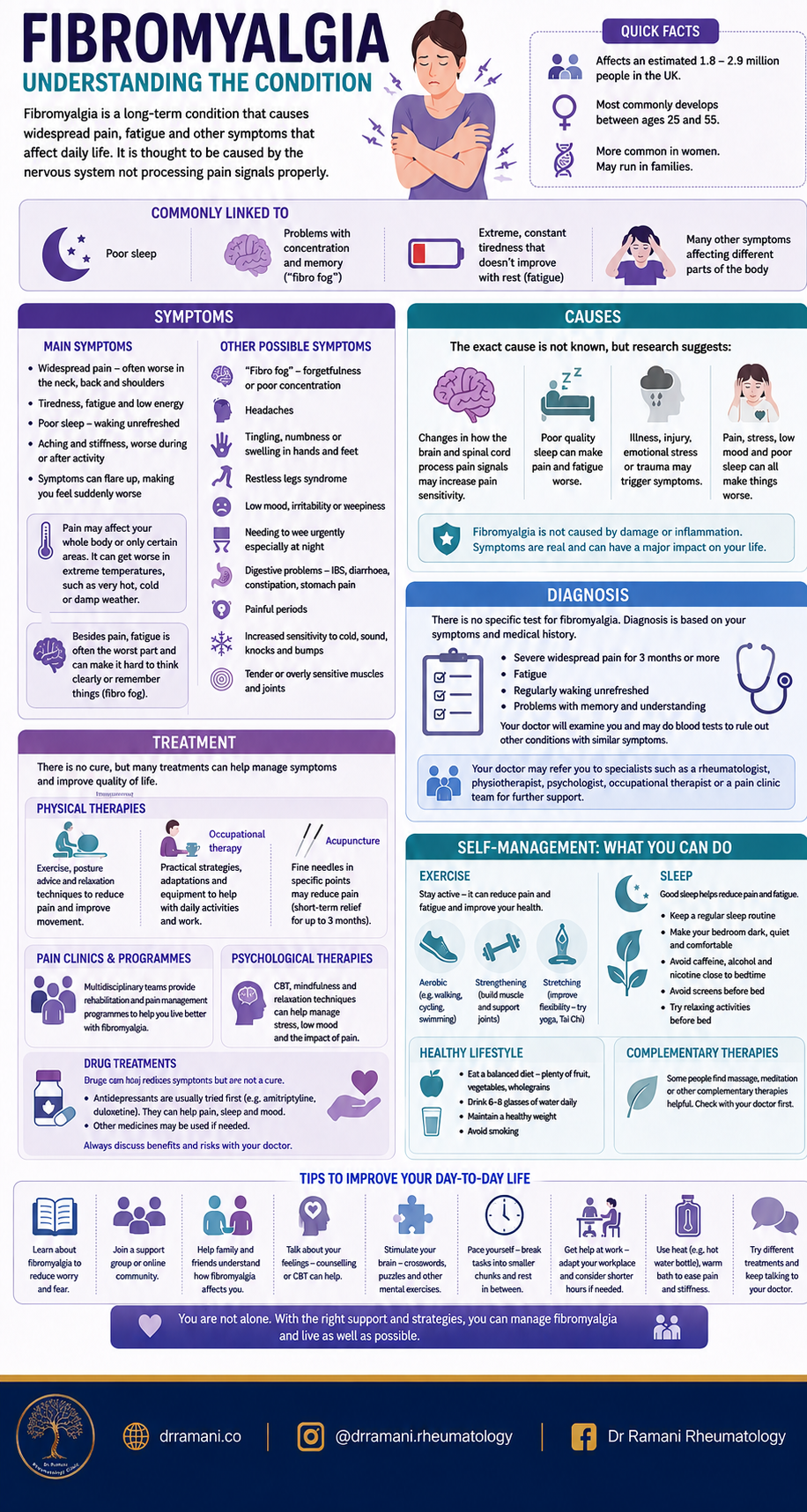 View the full-size infographic
Understanding fibromyalgia
Fibromyalgia is a long term condition that causes pain and tenderness all over the body. Unlike arthritis, this is not because of a problem in your joints, bones or muscles. It is thought to happen because the nervous system in the brain and spinal cord is no longer controlling and processing pain signals from the rest of the body properly. Alongside pain, it is closely linked with poor sleep, difficulty concentrating or remembering, and a deep fatigue that does not improve with rest.
Why it happens
We do not yet know the exact cause. Fibromyalgia is not caused by damage or injury to the body, but it does increase the sensitivity of nerve endings, so light pressure or a minor knock can be genuinely painful. Brain imaging studies show that the areas which register pain behave differently in fibromyalgia, so you may feel pain where someone else would feel only stiffness or discomfort. People with fibromyalgia also tend to get less deep sleep, and poor quality sleep is known to make pain worse and may even help cause it. Symptoms often begin after an illness, an accident, or a period of emotional stress and anxiety. None of this means the symptoms are imagined. It simply means the problem sits in how pain is processed rather than in the tissues themselves.
How I reach the diagnosis
Fibromyalgia can be difficult to diagnose because symptoms differ so much from person to person. The pattern I look for is severe pain lasting three months or more, fatigue, regularly waking unrefreshed, and problems with memory or thinking clearly. It really helps if you bring a written list of the physical and emotional problems you have been having. I will then examine you.
There is no blood test, x-ray or scan that confirms fibromyalgia. Tests are used to rule out other conditions with similar symptoms, such as rheumatoid arthritis, Sjögren disease and an underactive thyroid gland. It is also possible to have one of those conditions as well as fibromyalgia, which is why careful assessment matters.
Depending on what you need, I may involve a physiotherapist for exercise and relaxation techniques, a clinical psychologist or counsellor for approaches such as cognitive behavioural therapy and mindfulness, an occupational therapist for daily activities and work, or a pain service for longer term symptom management.
What treatment looks like
There is no cure yet, but there is a great deal we can do to improve how you feel and function. Physical and psychological approaches are often more effective than medication, so I usually build the plan around them.
- Physiotherapy to keep you active safely, strengthen muscles without straining them, improve posture, and teach relaxation techniques.
- Occupational therapy to find easier ways of doing everyday tasks, adapt your workspace, and use aids where they help.
- Acupuncture, which has short term evidence in fibromyalgia and can help you get started with self management.
- Pain management programmes run by a team of pain specialists, physiotherapists, occupational therapists and psychologists. These do not remove pain, but they reduce its grip on your life.
- Psychological therapies such as CBT, which break overwhelming problems into smaller pieces and change how stress, low mood and pain feed each other.
- Medication, usually considered after exercise, psychological therapy or acupuncture have been tried. Low dose antidepressants such as amitriptyline or duloxetine are the recommended first choice for unexplained long term widespread pain. They are given at lower doses than for depression, may take a few months to show full benefit, and are often taken about two hours before bed as they can cause drowsiness.
What you can do yourself
- Keep moving, but pace it. Combine gentle aerobic activity such as swimming, brisk walking or cycling with stretching and strengthening. Pacing means balancing activity and rest so you do not overdo it on good days.
- Protect your sleep. A dark, quiet, comfortable bedroom, a regular bedtime and waking time, a warm bath to ease stiffness, no caffeine for eight hours before bed, no alcohol, heavy meals or screens close to bedtime, and no clock watching during the night.
- Eat well. No specific diet has been proven to treat fibromyalgia, but a balanced diet low in saturated fat, sugar and salt, plenty of fruit and vegetables, six to eight glasses of water a day, and a healthy weight all help.
- Use heat. A hot water bottle, hot bath or shower can ease pain and morning stiffness.
- Work with your fibro fog. Puzzles and crosswords, doing demanding tasks at your best time of day, and breaking work into smaller chunks with rests in between.
- Ask for support. Talk to family, friends and your workplace about how pain affects you even when you look well. Shorter hours or a better set up desk can make a real difference. Counselling can help with anxiety, low mood or anger.
- Be selective with complementary therapies. Massage or meditation help some people, though the effect of massage is often short lived. Tell me before starting anything new, use a properly registered therapist, and only continue if it is genuinely helping.
What the future holds
Because symptoms vary so much, I cannot predict exactly how long you will have fibromyalgia or how much it will affect you. What I can say is that it does not appear to cause lasting damage to the body, and that treatment, therapy and self management can meaningfully improve quality of life. Keeping muscles and joints strong through activity, and building up gradually, tends to improve symptoms over time.
Some of the information on this page is adapted from Arthritis UK: Fibromyalgia. It is general education and does not replace an individual medical assessment.
What fibromyalgia is
Fibromyalgia is a condition where the nervous system becomes more sensitive to pain signals. It is not caused by joint damage or inflammation, which is why blood tests and scans are usually normal. This does not make the pain any less real. Fibromyalgia often overlaps with poor sleep, fatigue, low mood, brain fog and irritable bowel symptoms.
Symptoms to look out for
Widespread pain on both sides of the body, above and below the waist, for more than 3 months
Neck and back pain that often feels worse than the rest
Aching and stiffness that worsens during or after activity
Deep tiredness that is not fully relieved by rest
Unrefreshing sleep, or waking up feeling as tired as when you went to bed
Trouble with concentration or memory, sometimes called 'fibro fog'
Sensitivity to touch, cold, sound, light, knocks and bumps
Headaches, jaw pain, or irritable bowel symptoms such as diarrhoea, constipation and stomach pain
Tingling, numbness or a swollen feeling in the hands and feet
Restless legs, especially at night, and a frequent urge to pass urine at night
Painful periods
Anxiety, irritability or low mood that can come and go with the pain
Flares, where symptoms suddenly become much worse for a period
Why this matters to a rheumatologist
As a rheumatologist, I see fibromyalgia both on its own and alongside other rheumatic conditions such as rheumatoid arthritis, lupus and Sjögren's disease. My first job is to make sure we are not missing an inflammatory condition, a thyroid issue, vitamin D deficiency, or another treatable cause of widespread pain. Once we have done that, I can confidently make the diagnosis and focus on management.
Signs I would like you to seek care for
For emergency symptoms please seek urgent or emergency care first rather than waiting for a WhatsApp reply.
New joint swelling, redness or warmth (not typical of fibromyalgia)
Fever, unexplained weight loss, or drenching night sweats
New rashes, mouth ulcers, or hair loss
Muscle weakness rather than just pain
Numbness, tingling or weakness in an arm or leg
Severe worsening of mood or thoughts of self harm, which needs urgent support
What a specialist review looks like
In clinic I take a full history, examine you carefully, and order targeted tests to rule out other causes. I then explain fibromyalgia in plain language so you understand what is happening in your body. Treatment is not about a single tablet. We look at sleep, gentle graded exercise, pacing, stress and mood, and where useful, medications that quiet the pain pathways. My goal is to help you feel more in control, not just more medicated.
Questions my patients often ask me
Yes. Fibromyalgia is a well recognised condition where the nervous system amplifies pain signals. Scans and blood tests can be normal, and that can feel dismissive, but the condition is real and treatable.
Speak with me
If widespread pain and fatigue have taken over your days, please seek specialist care. I would like to look at the full picture with you and build a plan that fits your life.
Other conditions I treat
This page is for general education only and does not replace medical advice. Please consult a qualified healthcare professional for diagnosis and treatment.