
Benralizumab
Also known as: Fasenra
Benralizumab is a targeted injection that removes eosinophils, the white cells behind certain forms of vasculitis and severe asthma. In my clinic it is used mainly in EGPA, to hold the disease quiet and to get you off high-dose steroids.
Calm, careful medication review by a consultant rheumatologist.
Fasenra (benralizumab) at a glance
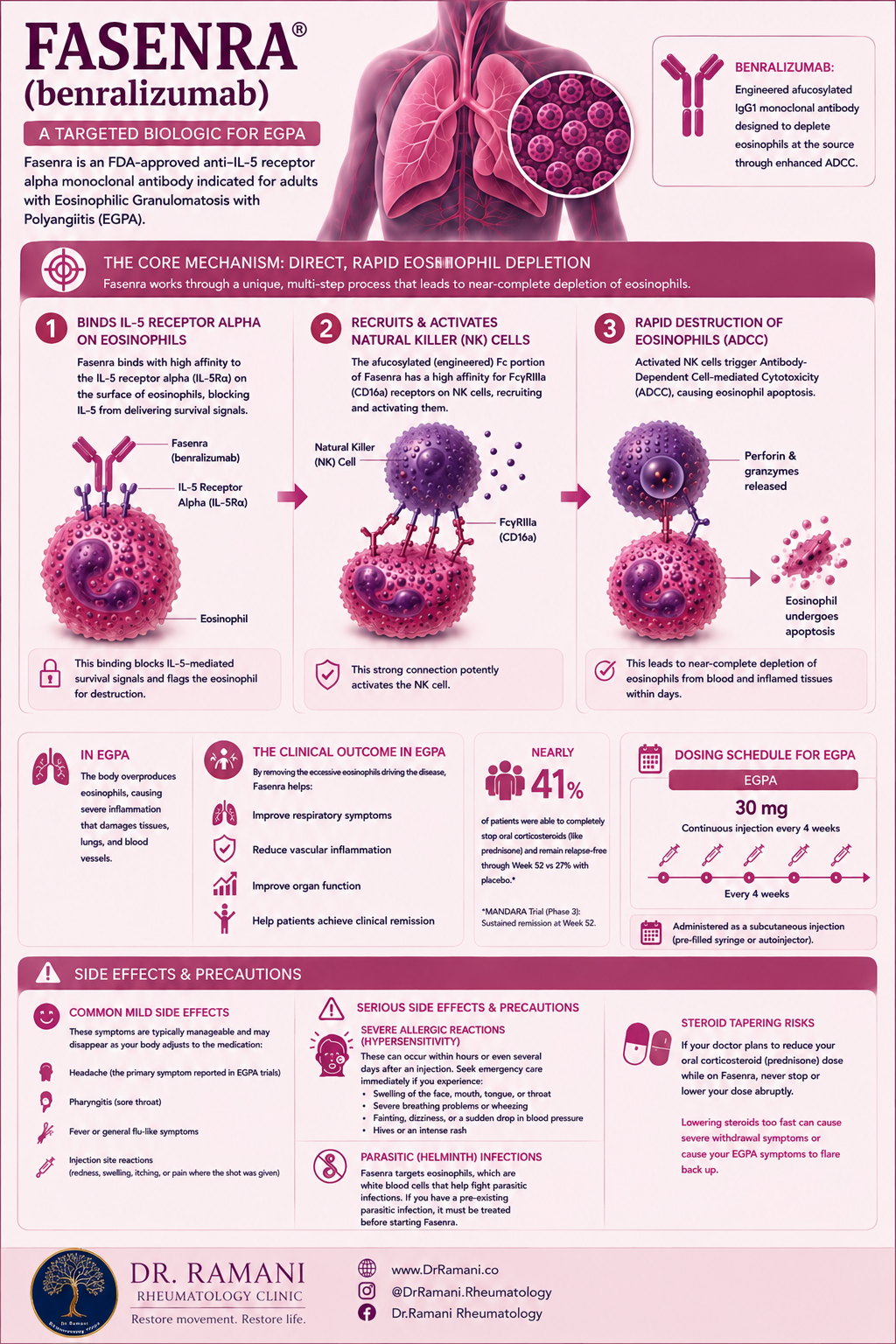
How benralizumab works in EGPA, the 30 mg every 4 weeks schedule, and the side effects I go through with you. Tap to open the full-size version.
What this medicine is
Benralizumab is a monoclonal antibody that binds the interleukin-5 receptor on eosinophils. Rather than simply blocking the IL-5 signal, it marks those cells for removal by your own natural killer cells, so eosinophil counts usually fall to nearly zero. It is given as a subcutaneous injection, meaning a small injection under the skin, on a regular schedule rather than daily, in clinic or at home once you have been trained. It is added to your existing treatment rather than replacing it. Doses differ between conditions, so your specialist sets the regimen and I do not publish dose schedules here.
Uses and context
The rheumatology use that matters here is eosinophilic granulomatosis with polyangiitis, previously called Churg-Strauss syndrome: a vasculitis combining asthma, nasal and sinus disease, a high eosinophil count and sometimes nerve, skin, gut or heart involvement. Benralizumab has been shown to maintain remission and reduce oral steroid dose in relapsing or refractory EGPA. It is more commonly prescribed for severe eosinophilic asthma and for nasal polyps, so you may be under a respiratory physician or ENT surgeon at the same time. It does not treat rheumatoid arthritis, lupus or other rheumatic diseases that are not eosinophil driven.
How this relates to rheumatology care
How I use it in practice: in EGPA, benralizumab is a maintenance and steroid-sparing medicine, not a rescue treatment. Organ-threatening or life-threatening disease is treated first with steroids plus a stronger immunosuppressant such as rituximab or cyclophosphamide. Once you are stable, benralizumab helps hold remission and lets me taper prednisolone, which is where most of the long-term damage in EGPA comes from. Benefit generally builds over one to three months, judged on your asthma control, sinus symptoms, nerve symptoms, eosinophil count and how much steroid you still need. I never taper steroids abruptly just because your bloods look good. Related pages you may find useful are my guides to EGPA, vasculitis and mepolizumab, the closely related option.
What safety checks may matter
Confirming an eosinophil-driven diagnosis and recording a baseline eosinophil count, since this medicine only helps that pattern of disease
Screening and treating any parasitic worm infection before starting, as eosinophils help fight these
A clear baseline record of your asthma, sinus, nerve and skin symptoms to judge response against
A written, gradual steroid tapering plan, with bone protection and blood sugar reviewed while you remain on prednisolone
Blood count, eosinophil count and inflammatory markers checked at review appointments
Vaccinations reviewed, with non-live vaccines such as influenza, COVID-19 and pneumococcal encouraged
An agreed plan for what to do if asthma or vasculitis symptoms return between appointments
Side effects and red flags
If you have emergency symptoms such as severe allergic reaction, breathing difficulty, chest pain, stroke-like symptoms, severe abdominal pain, vomiting blood, black stools, sudden vision loss, severe infection symptoms, or severe weakness or confusion, please seek urgent medical care first rather than waiting for a WhatsApp reply.
Worsening breathlessness or wheeze, or needing your reliever inhaler much more often
New numbness, tingling, burning pain or weakness in the hands or feet, which can mean nerve involvement
Chest pain, palpitations, ankle swelling or breathlessness when lying flat, which can suggest heart involvement in EGPA
A new purple or red rash, especially on the legs, or painful skin nodules
Fever, night sweats or unexplained weight loss
Facial or tongue swelling, widespread rash or difficulty breathing after an injection, which may be a severe allergic reaction
Things worth knowing day to day
Injection-site reactions such as redness, itching or a small lump are the commonest side effect and usually settle in a day or two.
Headache and sore throat are reported in the first weeks and generally improve.
Do not reduce or stop your inhalers or oral steroids on your own. Sudden steroid withdrawal in EGPA can trigger a serious relapse.
Tell me early about a painful blistering rash in a band, which may be shingles, and ask me about the inactivated shingles vaccine.
If you travel to areas where worm infections are common, or develop diarrhoea and abdominal pain after travel, let me know so this can be checked.
Store the pen or syringe in the fridge as instructed and let it reach room temperature before injecting, which makes it more comfortable.
Discuss pregnancy and breastfeeding with me in advance, so we can balance keeping your disease controlled against limited pregnancy data.
Keep your respiratory or ENT specialist involved, since much of the benefit shows in your breathing and sinuses.
Questions patients often ask me about this medicine
Speak with me
If you have EGPA or eosinophil-driven disease and cannot get off steroids, or benralizumab has been suggested and you want it explained clearly, please message my clinic. I will review your counts, your symptoms and your steroid dose with you.
Trusted patient information sources
Other medications used in rheumatology care
This page is for general education only and does not replace medical advice. Please consult a qualified healthcare professional for diagnosis and treatment. Do not start, stop, or change any medicine without advice from your doctor.