
Methotrexate: A Patient Guide for Rheumatology Care
Methotrexate is one of the most commonly used medicines in rheumatology. It is often prescribed to control inflammation, reduce joint swelling, and protect joints from long-term damage.
What is methotrexate?
Methotrexate is a disease-modifying anti-rheumatic drug, also called a DMARD. In rheumatology, it is used at low doses to calm overactive inflammation in autoimmune conditions.
Unlike simple painkillers, methotrexate does not just mask pain. It helps control the underlying inflammation that can damage joints and tissues over time.
This is why methotrexate is often called an “anchor medication” in rheumatology care.
Methotrexate: what you need to know
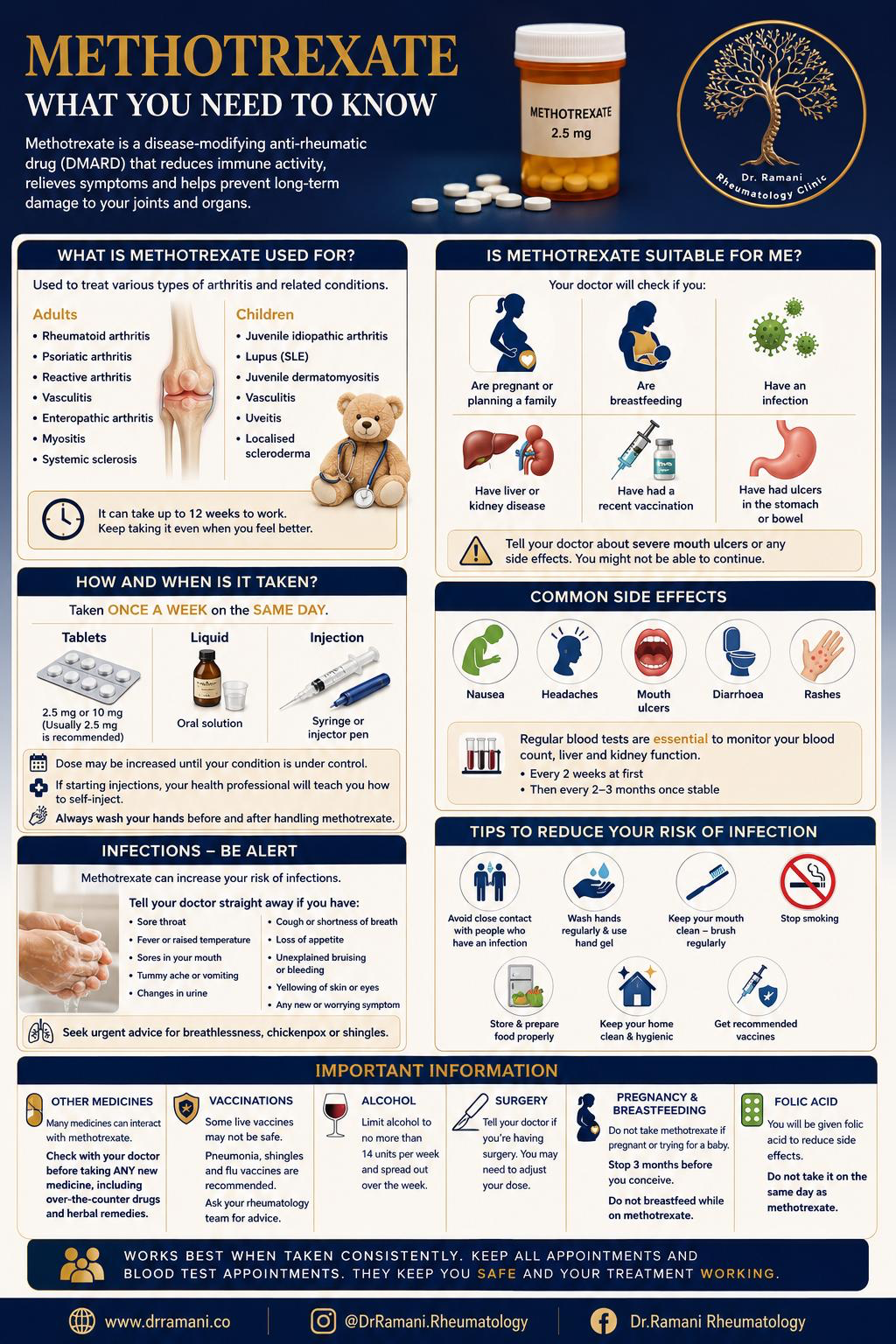
Tap the image to open the full-size version you can save or print.
What conditions is methotrexate used for?
The reason for prescribing methotrexate may differ from patient to patient. These are some of the conditions where I commonly use it.
Rheumatoid arthritis
Psoriatic arthritis
Inflammatory arthritis
Some lupus-related conditions
Some vasculitis or connective tissue disease cases
Other autoimmune rheumatic conditions, depending on the doctor's assessment
How does methotrexate help?
In autoimmune rheumatic disease, the immune system can become overactive and cause inflammation in the joints or other tissues. Methotrexate helps reduce this overactivity.
Methotrexate does not work overnight. It may take several weeks before patients notice improvement.
- Less joint swelling
- Less morning stiffness
- Less inflammation
- Fewer flares in some patients
- Better long-term disease control
- Reduced risk of joint damage in inflammatory arthritis
How is methotrexate usually taken?
Methotrexate is usually taken once a week, not every day. It may be prescribed as tablets or as an injection, depending on the patient’s condition, response, and tolerance.
Important
Methotrexate for rheumatology is usually a weekly medicine. Taking it daily by mistake can be dangerous. Always follow the exact instructions given by your doctor.
Why folic acid may be prescribed
Many patients taking methotrexate are also prescribed folic acid. Folic acid may help reduce some side effects such as mouth ulcers, nausea, and stomach upset.
Follow your doctor’s instructions on when and how to take folic acid.
What monitoring is needed?
Patients taking methotrexate usually need regular blood tests. This helps the doctor monitor blood counts, liver function, and kidney function.
Full blood count
Liver function tests
Kidney function tests
Review of symptoms and side effects
Medication and infection review
Monitoring is not meant to scare patients. It is part of using the medicine safely.
Possible side effects
Not every patient gets side effects. Many patients tolerate methotrexate well with proper monitoring.
- Nausea
- Loss of appetite
- Mouth ulcers
- Tiredness
- Stomach upset
- Headache
- Mild hair thinning
Report these symptoms promptly
- Fever or signs of infection
- Shortness of breath or persistent cough
- Unusual bruising or bleeding
- Yellowing of the eyes or skin
- Severe mouth ulcers
- Severe vomiting or diarrhoea
- New rash
- Feeling very unwell
Alcohol, liver health, and methotrexate
Methotrexate can affect the liver in some patients. Alcohol may increase liver strain, so patients should ask their doctor what level of alcohol intake, if any, is safe for them.
Pregnancy and family planning
Methotrexate is not suitable during pregnancy. Patients who are pregnant, planning pregnancy, or trying to conceive should tell their doctor before starting or continuing methotrexate.
Men and women should discuss family planning with their rheumatologist if methotrexate is part of their treatment plan.
Vaccines and infections
Because methotrexate affects the immune system, patients should tell their doctor before taking vaccines or if they develop an infection.
Some vaccines may be recommended before or during treatment, while some live vaccines may not be suitable depending on the patient’s immune status and treatment plan.
Vaccinations & General Advice for Autoimmune PatientsCommon patient worries
Is methotrexate chemotherapy?
Methotrexate can be used in cancer treatment at much higher doses, but in rheumatology it is usually used at much lower doses to control inflammation. Patients should follow the rheumatology instructions given by their doctor.
Will I be on methotrexate forever?
This depends on the condition, response to treatment, side effects, and disease control. Your doctor will review this over time.
Can I stop methotrexate when I feel better?
Do not stop methotrexate without medical advice. Symptoms may improve because the medication is controlling inflammation.
When to WhatsApp the clinic
If you are unsure about anything related to your methotrexate, please reach out. It is safer to ask early than to wait.
WhatsApp the clinic if
- You are unsure how to take your medication
- You accidentally missed a dose
- You may have taken the wrong dose
- You develop fever or infection symptoms
- You develop mouth ulcers, severe nausea, or unusual bruising
- You are planning pregnancy
- You are unsure about vaccines
- You have been prescribed another new medication
- You are worried about side effects
Methotrexate FAQ
Questions about your methotrexate?
Whether you have just been prescribed methotrexate or have been on it for a while, you can WhatsApp the clinic for personalised advice.
Related medications and topics
More medication guides are on the way. These pages will be linked here as they become available.